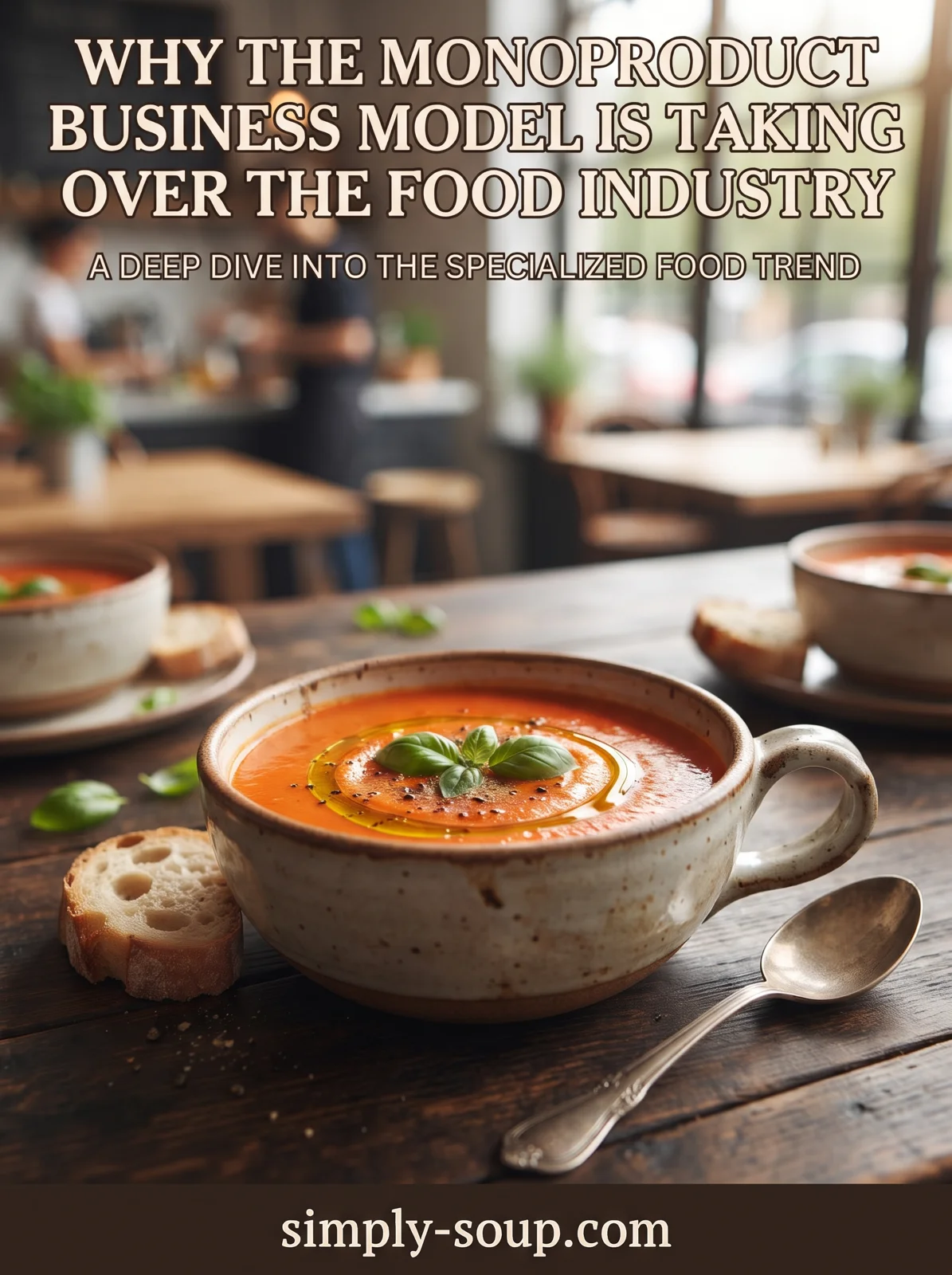
A business built around one main type of food is sometimes called a monoproduct business. For a soup stall or takeaway, that might mean a small rotating menu of soups, with bread and a few toppings. The appeal is straightforward: fewer dishes can make planning and preparation easier.
That does not mean success is automatic. The original illustration makes a broad claim about this model taking over the food industry; treat it as a theme, not evidence of market growth.
A shorter menu can simplify preparation
Shared ingredients can reduce the number of items you buy and store. Several soups might use the same onion, carrot and celery base, while toppings provide variety. A small menu can also help staff learn the preparation and service routine.
The trade-off is that customers have fewer choices. You still need to understand dietary preferences and keep allergen information accurate for each recipe.
Ingredient cost is only one part of the price
Vegetables and pulses can be economical ingredients, but food cost alone does not tell you whether a business makes money. Packaging, energy, labour, pitch fees, transport, payment fees and unsold portions all affect the result.
Cost each batch using your own supplier prices and measured yield. Then work out the cost per saleable portion. Avoid assuming a fixed food-cost percentage or exceptional margins simply because the product is soup.
Batch cooking needs a sales plan
Large batches can make preparation efficient when demand is predictable. They can also create waste when demand falls short. Start with modest quantities, record what sells and adjust the next batch. A limited menu helps, but it cannot guarantee zero waste.
Choose a format you can test
A market stall, a small takeaway or a regular workplace lunch service each brings different practical needs. Think about how you would transport, hold, serve and clean up, as well as how customers will discover you.
A useful early test is to ask a potential venue about footfall, competing food offers, power, water and trading terms. Check local food-business requirements with the relevant authority before selling; the rules depend on where and how you operate.
Questions to answer before spending
- Who will buy, and on which days?
- What portion size and price make sense for that audience?
- How many portions must you sell to cover all your costs?
- What happens to demand in warmer weather?
- Can you manage food safety, storage, allergens and service consistently?
A focused menu is a useful starting point, not a business plan on its own. Build your decisions around measured costs and small tests.
Visit the Soup Business Blueprint page for its current availability.