Open the fridge and you might find a couple of carrots, half a leek, a potato and a tin of beans in the cupboard. That does not look like a recipe yet. It can, however, become a very good pot of soup once you know what each ingredient contributes.
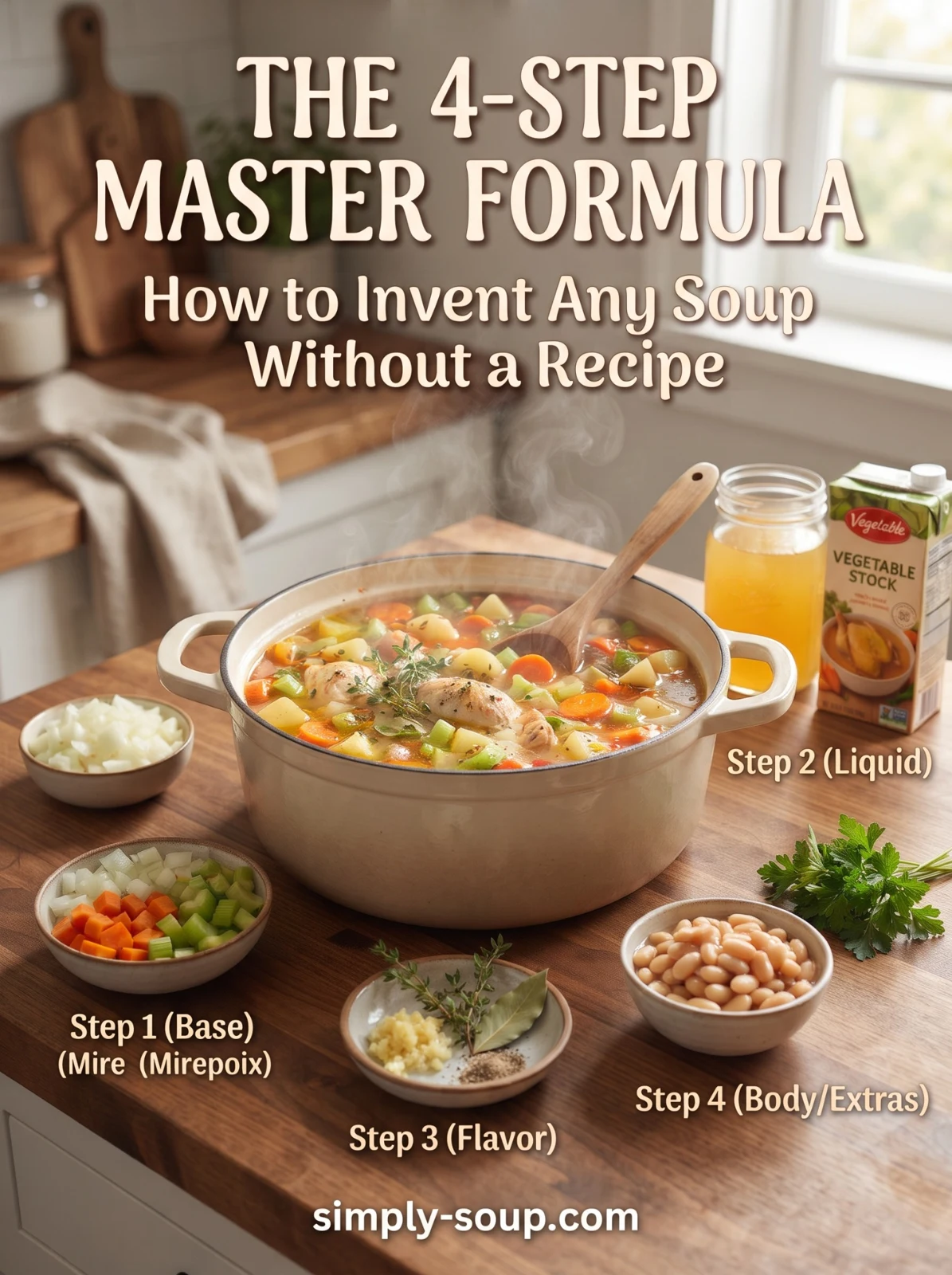
The four-step formula in our Pinterest pin gives you a useful starting point: base, liquid, flavour, and body or extras. Think of these as four decisions rather than four rigid cooking stages. Garlic may go in before the stock, potatoes need time to soften, and tender herbs often work best at the end.
This approach is especially useful for everyday vegetable, bean and broth-based soups. It gives you room to improvise without pretending that every ingredient cooks in the same way.
Build a savoury base → choose your liquid → give it a flavour direction → add body, texture and finishing touches.
Step 1: build a flavourful base
The chopped onion, carrot and celery pictured in the pin are a classic starting point known as mirepoix. You do not need perfect knife skills or an exact ratio. Chop everything fairly evenly so it softens at a similar pace.
For a modest saucepan of soup, start with one onion, one carrot and one celery stick, plus about a tablespoon of olive oil or butter. Warm the fat over a medium-low heat, add the vegetables and cook gently, stirring occasionally, until they soften. Allow roughly 8–10 minutes, adjusting the heat if the onion begins catching.
This is a starting guide, not a tested recipe with a fixed yield. Your pan, vegetable sizes and preferred thickness will affect the result.
Use what you have
- No onion? A leek or a few shallots can provide the base.
- No celery? Leave it out. You can still make a satisfying soup.
- Adding garlic? Stir it in towards the end of softening the vegetables so it does not burn.
- Want a deeper flavour? Roast suitable vegetables separately, then add them to the softened base.
You are looking for a pleasant foundation, not dark, burnt bits. If the pan catches, lower the heat and add a small splash of water. Do not try to disguise a badly burnt base with extra seasoning.
Step 2: choose your liquid
Stock brings the ingredients together. Vegetable stock is a flexible starting point; chicken or beef stock can suit a meat-based soup. Water also works when the vegetables and seasonings provide enough flavour, although the result may need more careful finishing.
For your first improvised batch, pair the softened base with roughly 400–600g of additional chopped vegetables. Have around 750ml–1 litre of stock available, but add only enough to just cover the vegetables initially. A wide pan may need more liquid than a narrow one.
You can thin soup later. Starting with too much stock makes it harder to get a full flavour without a long reduction. Keep extra liquid nearby, particularly if you add ingredients that absorb it.
Match the liquid to the direction
- Light and fresh: vegetable stock with leeks, peas or courgettes.
- Rich and savoury: beef stock with mushrooms or a properly cooked beef soup.
- Tomato-based: tinned tomatoes plus enough stock to reach the consistency you want.
- Creamy: stock for cooking, then a little cream or coconut milk towards the end.
If you would like to make your own, our guide to clear beef broth explains gentle simmering and straining. Homemade is optional: a stock cube is a perfectly practical way to get supper started.
Step 3: give the soup a clear flavour direction
The herbs, garlic and pepper in the pin are a reminder that a few deliberate choices work better than a little of everything in the spice cupboard. Pick a direction and keep it simple.
- Traditional and savoury: thyme, a bay leaf and black pepper.
- Warm and earthy: cumin with carrot, squash or chickpeas.
- Fresh and bright: parsley and a little lemon juice added at the end.
- Tomato and herb: oregano during cooking, with fresh basil to finish.
The order matters. Ground spices can be stirred briefly into the softened base before you add liquid; avoid scorching them. Sturdy herbs can simmer with the vegetables. Delicate herbs and lemon juice usually make more impact near serving time. Remove whole bay leaves before serving.
Taste in small steps
Stock cubes, cheese and other additions may already contain plenty of salt. Taste before adding more. If the soup seems flat, try a small squeeze of lemon in a spoonful first. If that improves it, add a little to the pan and taste again.
Too much seasoning is harder to fix than too little. Keep chilli, salt and acidic ingredients modest until you know what the whole pot tastes like.
Step 4: add body, texture and extras
This is where the soup becomes the meal you want. The white beans in the pin suggest one easy option: drained, tinned beans add substance without the preparation required by dried beans.
Choose your main additions before cooking, even though we discuss them fourth. Hard vegetables need time in the simmering broth; tender greens need much less. Do not wait until the end to drop raw potatoes into an otherwise finished soup.
- For natural thickness: cook potato, squash or other suitable vegetables until tender, then blend some or all of the soup.
- For a hearty bowl: add drained, tinned beans or chickpeas and heat them through.
- For pasta: follow the packet cooking time and allow for extra liquid absorption. Cook it separately if you plan to store the soup.
- For a fresh finish: add tender spinach towards the end and cook until wilted.
Dried pulses are not interchangeable with tinned ones: soaking and cooking requirements vary. Follow the packet instructions. For an easy first attempt, use ready-cooked pulses.
What about meat or fish?
The pin shows a hearty mixed soup, but raw meat and fish need their own cooking instructions. The formula is not a universal cooking time. For your first meat-based bowl, use our cozy ground beef soup recipe as a starting point.
When checking meat with a clean food thermometer, the Food Standards Agency gives 70°C for two minutes as one safe core-temperature combination. Follow appropriate guidance for the ingredient rather than relying on the broth bubbling around it.
Three combinations to get you started
These are flavour ideas rather than fully tested recipes. Use the formula, cook the ingredients properly and adjust the liquid to your liking.
Carrot, white bean and thyme
Soften onion and celery, add chopped carrots and vegetable stock, then simmer with thyme until the carrots are tender. Add drained, tinned white beans and heat through. Blend a portion for a thicker texture, and finish with black pepper.
Leek, potato and parsley
Soften sliced leek gently, add small potato pieces and enough vegetable stock to cover, then simmer until tender. Mash or blend to your preferred consistency. Finish with chopped parsley and, if you like, a small splash of cream.
Tomato, chickpea and cumin
Soften onion, stir in garlic and a little cumin, then add tinned tomatoes and vegetable stock. Simmer until the flavours come together. Add drained, tinned chickpeas, heat through and finish with a little lemon if needed.
Fix the texture before you serve
Too thick? Add hot water or stock a little at a time. Too thin? Blend some cooked vegetables or beans into the broth, or simmer uncovered while watching the seasoning. Too salty? Dilute with unsalted liquid and, if practical, add more unseasoned cooked ingredients. A potato is not a reliable way to remove excess salt.
Before blending, check your equipment’s instructions for hot liquids. Many jug blenders are unsuitable. With an immersion blender, keep the head submerged while running and take care to avoid splashes. Our kitchen equipment guide covers the useful basics.
Make a note of your best bowl
You do not need a recipe to begin, but a quick note helps you repeat a success. Record the vegetables, approximate stock quantity and seasonings you used, plus anything you would change next time.
If you make extra, cool it promptly in smaller containers and refrigerate within one to two hours. Eat refrigerated leftovers within 48 hours or freeze them, and reheat only once until steaming hot throughout. Our cooling, freezing and reheating guide explains the process.
Frequently asked questions
Can I make soup without stock?
Yes. Start with a well-cooked vegetable base, use water and build flavour with herbs or spices. Taste near the end before deciding whether it needs salt or a little acidity.
Do I have to use onion, carrot and celery?
No. They are a useful combination, not a requirement. Leek and potato, onion and tomato, or shallot and mushroom can take you in different directions.
Can I use frozen vegetables?
Yes, following their packet cooking instructions. Do not assume frozen vegetables are ready to eat simply because they have thawed.
Should every soup be blended?
No. Leave it chunky, blend it smooth or blend only a portion. The right texture is the one that suits the ingredients and the meal you want.
Start with one simple combination and make small adjustments. A softened base, a suitable liquid, a clear flavour and a little body are enough to turn a few everyday ingredients into your own bowl of soup.
Food-safety references: Food Standards Agency: cooking your food and chilling, freezing and defrosting.