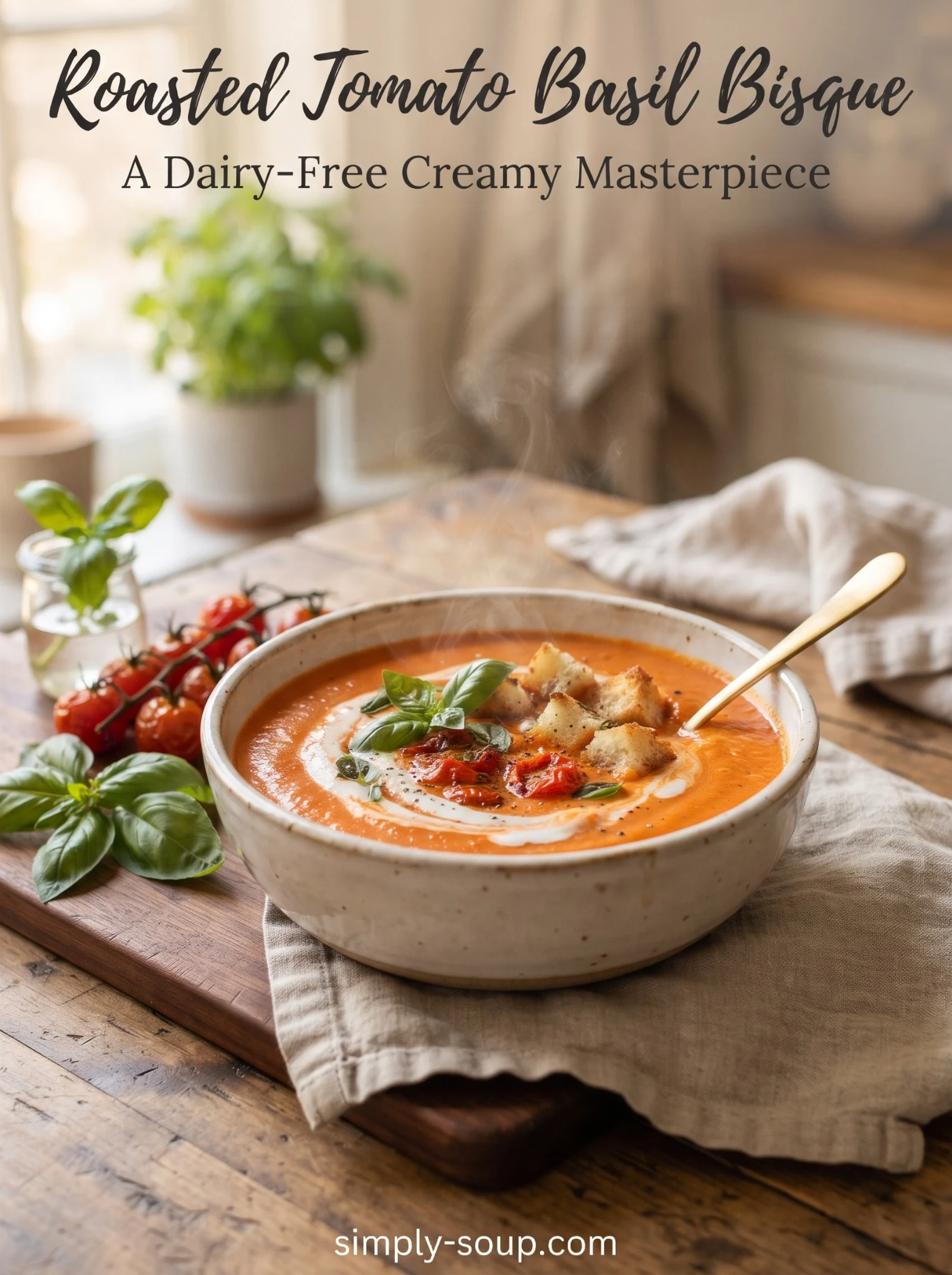
Deep orange soup, fresh basil, golden croutons and a pale swirl on top: the appeal of this bowl is its combination of comfort and freshness. Roasting the tomatoes first gives the soup a fuller flavour, while blended white beans provide body without butter, flour or dairy cream.
This is a soup to make when you can give the oven time to do some of the work. The method is straightforward: roast the vegetables, soften everything together in a saucepan, blend, then finish with basil and an unsweetened plant-based cream. Serve it for lunch with toast, or make it the centre of a simple supper.
A little background: what makes it a bisque?
Bisque has a long association with French cooking and shellfish. The Académie française’s 1798 dictionary describes it as a soup made with a crayfish coulis. That is a useful reminder that the word originally carried a more specific meaning than simply “a creamy soup”.
Today, you will also see the name used for smooth vegetable soups, including tomato bisque. Here, it describes the rich, blended texture we are aiming for. This is a modern dairy-free tomato interpretation, rather than a traditional shellfish bisque. There is no seafood in the recipe.
Tomato and basil are familiar partners for a reason: the tomato supplies the main savoury flavour and acidity, while basil adds a fresh herbal finish. Adding most of the basil near the end keeps that freshness distinct from the deeper flavour of the roasted vegetables.
Where the creaminess comes from
A drained tin of cannellini beans is the quiet helper in this recipe. Blended thoroughly, the soft beans thicken the soup without making it taste like a bean stew. A small amount of plant cream rounds out the texture and gives you the pale swirl shown in the picture.
Choose an unsweetened cooking cream, such as an oat or soya alternative. Vanilla-flavoured drinks and sweetened coffee creamers are unsuitable. Coconut milk can work, but it adds a recognisable coconut flavour; use it only if that is the result you want.
Use ripe tomatoes with a good flavour. Plum tomatoes are a useful choice, and a few cherry tomatoes can bring extra sweetness. Roasting improves the concentration of the flavour, but it cannot completely rescue bland, underripe fruit. Our four-step soup formula explains how the vegetable base, liquid and finishing ingredients work together.
The recipe
Serves: approximately 4 generous bowls
Preparation: about 15 minutes
Cooking: about 50–60 minutes
Total: allow 65–75 minutes
Timings and yield are estimates. Follow the texture and doneness cues below; this recipe has not been kitchen-tested by Simply Soup.
Ingredients
- 1.2kg ripe tomatoes, halved or quartered depending on size
- 1 large onion, peeled and cut into 8 wedges
- 4 garlic cloves, skins left on
- 2 tablespoons olive oil
- 1 tablespoon tomato purée
- 1 × 400g tin cannellini beans, drained and rinsed (about 240g drained)
- 500ml vegetable stock, plus up to 250ml extra to adjust the texture
- 100ml unsweetened oat or soya cooking cream, plus a little extra for serving if wanted
- 20g fresh basil, leaves and tender stems, plus a few leaves to garnish
- ¼ teaspoon salt to start, plus more only if needed
- Freshly ground black pepper
- Optional: ½ teaspoon sugar, only if the finished soup tastes too sharp
Equipment
A large rimmed roasting tray (or two smaller ones), a roomy saucepan, a spoon and a suitable hand blender. A jug blender can also be used if its manufacturer permits hot liquids.
Step-by-step method
- Heat the oven and prepare the vegetables. Heat to 200°C fan / 220°C conventional / gas 7. Wash the tomatoes and remove tough cores. Put them on the tray with the onion wedges and unpeeled garlic. Add the olive oil, the initial salt and some pepper. Toss gently, then arrange mostly cut-side up in a single layer. Use two trays if everything is crowded.
- Roast until soft and lightly browned. Cook for about 35–45 minutes, turning the onion once and rotating the trays if necessary. The tomatoes should have collapsed slightly, with some browned edges and juices in the tray. Check the garlic after about 25 minutes and remove it early if it is already soft. Avoid blackening the vegetables: a little colour is welcome, burnt patches are bitter.
- Transfer the flavour to the saucepan. Let the garlic cool just enough to handle, then squeeze the soft flesh from its skins. Put it in the saucepan with the tomatoes, onion and all the roasting juices. Loosen any sticky golden juices on the tray with a splash taken from the measured stock, then scrape them into the pan. Discard any burnt scraps.
- Add the beans and simmer. Stir in the tomato purée, drained beans and the remaining measured 500ml stock. Bring to a gentle simmer and cook for 10–15 minutes, stirring occasionally. Check that the onion is completely tender before blending. If it is still firm, give it a few more minutes.
- Blend until smooth. Take the pan off the heat and let vigorous bubbling stop. With a hand blender, keep the blade head submerged and blend carefully to avoid splashes. Continue until the beans and onion are fully smooth. For a jug blender, follow its hot-liquid instructions, work in small batches and allow the soup to cool as required. Never blend hot soup in a sealed personal smoothie cup.
- Add basil and plant cream. Reserve a few basil leaves for serving. Roughly tear the rest, add them with the 100ml plant cream and blend briefly again. Add extra stock a little at a time until the soup pours easily but still coats a spoon. You may not need the full extra 250ml.
- Warm, taste and serve. Return the pan to a gentle heat, stirring until hot throughout. Avoid a fierce boil after adding the cream. Taste before adding more salt. If the soup is distinctly sharp, try the optional ½ teaspoon sugar, stir and taste again. Ladle into bowls and finish with your chosen toppings.
Make it look like the picture
Keep the toppings simple so that the tomato soup remains the main event. For the creamy swirl, spoon a small amount of plant cream onto each bowl and draw a loose circle through it with the tip of a spoon. If the cream is thick, loosen it with a few drops of water first.
Add torn basil leaves immediately before serving. A few roasted cherry tomato halves make an attractive garnish too: reserve them from the tray before transferring the remaining vegetables to the saucepan. Finish with black pepper and, if you like, a few drops of olive oil.
Quick olive-oil croutons
Cut 2 thick slices of dairy-free bread into cubes and toss with 1 tablespoon olive oil and a pinch of dried oregano. Spread on a separate tray and bake at 180°C fan / 200°C conventional for about 10–15 minutes, turning once, until crisp and golden. Watch closely near the end. Add them to the bowls at the table so they retain some crunch.
For a more substantial meal, serve with a hummus sandwich, toasted sourdough or a simple bean salad. Check bread and topping labels if you need the whole meal to be dairy-free.
Adjust the soup to suit your tomatoes
- Too thick? Add hot stock or water in small splashes, stir and check again. The soup will also thicken a little as it stands.
- Too thin? Before adding the basil and cream, simmer uncovered for a few minutes to reduce it. Avoid repeatedly boiling the finished soup just to thicken it.
- Too sharp? Check the seasoning first. A little more plant cream can soften the flavour; the optional small amount of sugar can balance it. Neither change removes the acidity.
- Too bland? Try a pinch of salt and fresh pepper before adding other ingredients. If it tastes flat rather than sharp, a few drops of lemon juice may help. Taste after each adjustment.
- Not smooth enough? Blend for longer once the vegetables are fully tender. For an especially fine texture, pass the blended soup through a sieve before adding the basil and cream. This removes some tomato skin and seed fragments, but also reduces the yield.
- Bitter? Burnt garlic, blackened onion or charred tray residue can be the cause. Prevent this by checking the roasting vegetables; extra sugar will not reliably hide a burnt flavour.
Simple substitutions
No cannellini beans? Use the same drained weight of cooked butter beans. Keep the extra stock back until you have blended, because different beans produce slightly different textures.
No plant cream? Leave it out and use the beans for body. Blend thoroughly and adjust with stock. The result will be less rich, but still smooth. An extra teaspoon of olive oil stirred into each serving is another option.
Only tinned tomatoes available? Make a saucepan version with two 400g tins of tomatoes, including their juice. Chop and soften the onion in the oil for 8–10 minutes, add peeled, chopped garlic for a minute, then add the tomato purée, tomatoes, beans and just 300ml stock to start. Simmer for 20–25 minutes, until the onion is tender, then blend and finish as above. It will have a different flavour from the roasted version; add more stock only as needed.
Allergen checks: plant creams may contain soya, oats or nuts, stock may contain celery or wheat, and croutons commonly contain wheat. Dairy-free does not mean free from other allergens. For a milk allergy, check the ingredients and relevant precautionary labelling on every packaged ingredient.
Make ahead, store and reheat
Set aside any portions you want to save before adding croutons and garnishes. Divide leftovers into smaller containers so they cool promptly, then cover and refrigerate within one to two hours. Eat refrigerated leftovers within 48 hours or freeze them. These timings follow Food Standards Agency guidance.
Freeze in individual portions, leaving expansion space and labelling with the name and date. For best flavour, aim to use within about three months; this is a quality guide, not a promise of safety regardless of storage. Plant cream can separate slightly on thawing, so you can also freeze the soup base and add the cream and basil after reheating.
Defrost in the fridge, use within 24 hours of full defrosting, and reheat only once until steaming hot throughout. Stir during reheating and add a splash of water if needed. Our complete soup freezer guide covers portioning and storage in more detail.
Frequently asked questions
Do I need to peel the tomatoes?
No. A thorough blend usually incorporates the skins well enough for a home-style soup. If your blender leaves small pieces, sieve the soup for a finer finish rather than peeling every tomato before roasting.
Can I use dried basil?
Yes, though the result will be different. Add 1 teaspoon dried basil during the simmering stage, then taste. Fresh basil added at the end gives the bright finish that makes this particular bowl distinctive.
Is the recipe vegan?
It is vegan when made with suitable vegetable stock, plant cream and toppings. Check packaged ingredients rather than assuming every stock or bread is suitable.
Can I double the recipe?
Yes, if your trays, saucepan and blender have enough capacity. Spread the vegetables over extra trays instead of piling them up, and allow for a longer oven time if the oven is crowded. Blend in manageable batches and divide leftovers into smaller containers for cooling.
Why does the soup look more orange after blending?
The white beans and plant cream lighten the red tomato base. The final shade depends on the tomato variety, how much liquid you use and the cream you choose; it need not match the illustration exactly.
A good bowl here is about the balance: a full tomato flavour, a smooth texture and a fresh basil finish. Begin with less stock, taste near the end and let your own tomatoes guide the final adjustment.
Background reading: Académie française: bisque, 1798 edition; Fine Dining Lovers: bisque and its modern uses. Storage guidance: Food Standards Agency: cooking your food.