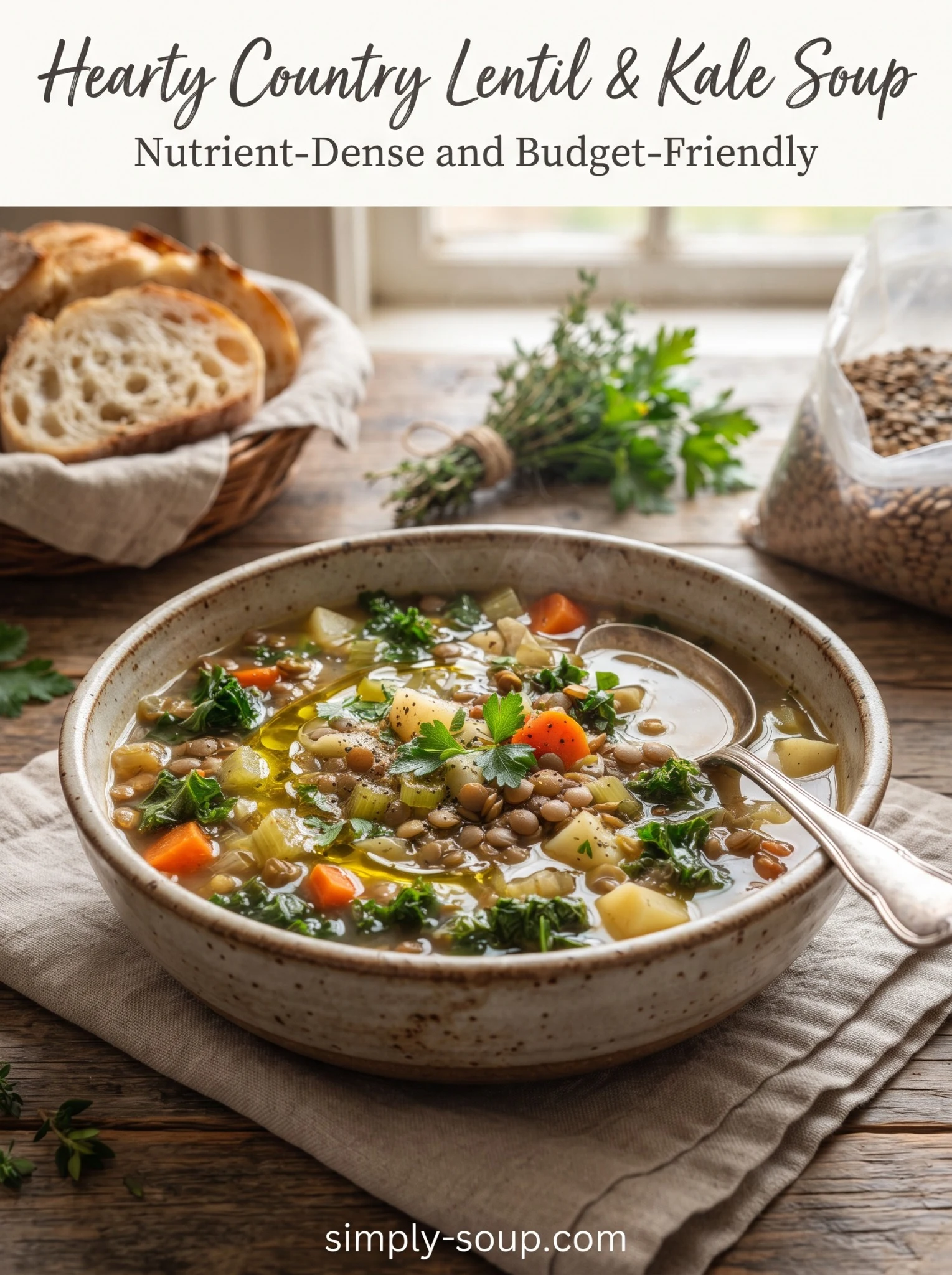
Some soups are smooth and delicate. This one is all about a generous spoonful: tender lentils, soft potato, sweet carrot and ribbons of kale in a savoury, herby broth. A little parsley, black pepper and olive oil finish the bowl, with bread alongside for anyone who wants it.
Inspired by the rustic bowl in our image, this is an uncomplicated one-pot recipe built around everyday ingredients. There is no cream, no meat and no need to blend the whole pan. The lentils do much of the work, giving the soup substance while the vegetables soften around them.
Below you will find a clear method, guidance on choosing lentils, sensible ways to keep costs down and a few adjustments for whatever is already in your kitchen.
A humble ingredient with a long history
Lentils have been part of human food culture for thousands of years. In an article for the United Nations, the Food and Agriculture Organization’s Director-General lists lentils among the Neolithic founder crops: plants associated with the beginnings of agriculture. Their place in the kitchen is much older than the modern idea of a meat-free meal.
This particular recipe is a modern country-style soup, not a claim to reproduce one historic regional dish. The combination is deliberately practical: a dried cupboard staple, a base of onion and roots, and greens added towards the end. “Country” describes its generous, rustic character rather than a specific place of origin.
It is also an adaptable approach. Once you understand the sequence, you can change the vegetables without losing the structure of the soup. Our four-step master formula for making soup is a useful companion if you enjoy cooking from what you have.
What makes this a nourishing bowl?
Lentils contribute plant protein and fibre. The NHS describes pulses, including lentils, as a source of protein, fibre, vitamins and minerals. Here, they sit alongside several vegetables, with potato making the bowl more substantial.
That is the basis for the title’s “nutrient-dense” description: a useful mix of ingredients, rather than a promise of a particular health outcome. We have not calculated a nutritional analysis for this recipe. Exact amounts of protein, fibre, salt and energy will depend on your ingredients, portion size and toppings.
A lower-salt vegetable stock lets you control the final seasoning more easily. Add any extra salt after the lentils are cooked and the broth has reduced, rather than salting heavily at the beginning.
Choose lentils that hold their shape
Whole brown or ordinary green lentils are the best fit for the chunky bowl in the image. They soften but generally keep their individual shape, leaving a broth with plenty to scoop up. Check the packet’s cooking instructions because varieties and brands differ.
Red split lentils behave differently. They cook more quickly and break down, producing a thicker, more blended-looking soup. They can make a good meal, but are not a direct timing substitute in this recipe.
Tinned lentils are already cooked and are useful when time is short. A separate adaptation appears below. Do not substitute the same weight of cooked lentils for dry ones: dried lentils absorb liquid and increase in weight during cooking.
The recipe
Serves: approximately 4 generous portions
Preparation: about 15 minutes
Cooking: about 45–60 minutes
Total: allow 60–75 minutes
Timing and yield are estimates. Lentil age, variety and vegetable size affect cooking time. This recipe has not been kitchen-tested by Simply Soup; use the doneness checks as well as your packet instructions.
Ingredients
- 1 tablespoon olive oil, plus an optional small drizzle for serving
- 1 large onion, finely chopped
- 2 medium carrots, scrubbed and cut into small pieces
- 2 celery sticks, sliced
- 3 garlic cloves, finely chopped
- 200g dried whole green or brown lentils
- 250g potatoes, scrubbed or peeled and cut into roughly 1.5cm cubes
- 1.25 litres vegetable stock, preferably lower-salt, plus extra hot water as needed
- 1 teaspoon dried thyme
- 1 bay leaf
- 150g kale leaves, weighed after removing thick stalks, washed and roughly chopped
- 1–2 teaspoons lemon juice or cider vinegar, to taste
- Freshly ground black pepper and salt if needed
- Optional: 2 tablespoons chopped fresh parsley, to finish
Equipment
A large saucepan with a lid, ideally at least 3.5 litres, a sieve, chopping board, knife and a wooden spoon. Allow enough room in the pan to stir without splashing.
Method
- Check and rinse the lentils. Spread them on a plate and remove any small stones or damaged pieces. Rinse in a sieve under cold running water. Whole lentils usually do not need soaking, but follow any preparation instructions on your packet.
- Build the vegetable base. Heat the oil in the saucepan over a medium-low heat. Add the onion, carrots and celery. Cook for 8–10 minutes, stirring regularly, until the onion softens. You want gentle softening, not dark browning. If the vegetables catch, lower the heat and add a tablespoon of water.
- Add the garlic and herbs. Stir in the garlic and dried thyme for about a minute, just until fragrant. Have the stock ready so the garlic does not burn.
- Start cooking the lentils. Add the rinsed lentils, bay leaf and 1.25 litres stock. Bring to the boil, then follow any initial boiling instructions on the lentil packet before reducing to a steady gentle simmer. Partially cover and simmer for about 15 minutes, stirring occasionally. Keep the lentils comfortably covered with liquid.
- Add the potatoes. Stir in the potato cubes and continue simmering for about 20–25 minutes, or until the potatoes are tender and the lentils are almost fully soft. Test several lentils: there should be no hard, chalky centre when they are ready. If necessary, continue cooking and add hot water in small amounts to maintain a soup-like consistency.
- Add the kale near the end. Stir in the chopped kale and simmer for another 5–8 minutes, or until tender enough for your liking. Older, tougher leaves may need longer. The lentils should now be fully tender and the potatoes should give easily when pressed with a fork.
- Finish and adjust. Remove the bay leaf. Stir in 1 teaspoon lemon juice or cider vinegar, add black pepper, then taste. Add the second teaspoon of acid only if needed. Check before adding salt, as the stock may already supply enough. Loosen with a splash of hot water if the soup has become too thick.
- Serve. Ladle into bowls and add parsley if using. Finish with a little olive oil if you like the glossy surface in the picture. Serve bread separately, and allow the soup to cool to a comfortable eating temperature.
The small details that make a difference
Keep the vegetables a manageable size
Large carrot chunks and tiny potato pieces do not cook at the same pace. Keep the carrots fairly small and the potatoes around 1.5cm. Starting the lentils before adding the potatoes helps reduce the chance of the potatoes breaking apart while the lentils are still firm.
Remove the toughest kale stalks
Hold each stalk and pull or cut away the leafy part. Chop the leaves into pieces that fit on a spoon. If the stalks are tender and you want to use them, finely slice them and add with the onion, carrot and celery so they have longer to soften.
Save the bright finish for the end
A small amount of lemon juice or vinegar lifts the finished broth. Add it after the lentils have softened; acidic ingredients can slow their softening. You are aiming for a fresher flavour, not a noticeably sour soup.
How to keep it budget-friendly
The recipe uses dried lentils, ordinary root vegetables and a modest amount of oil. There is no need for premium lentils, fresh herb packets or expensive garnishes. Dried thyme is enough, and parsley is optional.
- Compare the cost of usable portions. Dried lentils often stretch further, while tinned ones save cooking time. Consider the purchase price, drained yield and fuel needed rather than assuming one option always wins.
- Use the greens you already have. A bag of frozen chopped kale can be practical if fresh leaves tend to go unused. Follow its packet cooking instructions and stir it into the soup near the end.
- Use sound vegetables before they are wasted. Slightly bendy carrots or a spare piece of celery can go into soup if they are still sound. Discard mouldy or spoiled produce.
- Keep the extras optional. A plain slice of bread is perfectly suitable. You do not need artisan sourdough, seeds or specialist oils.
- Portion before serving. Set aside tomorrow’s lunch before bringing the pan to the table. Planning the leftovers makes a batch more useful.
For your own cost per bowl, add the cost of the quantities actually used, include a reasonable allowance for cooking energy, and divide by the portions you make. Keep bread and toppings separate if they vary. There is no fixed price-per-serving claim here because shop prices, pack sizes and portions differ.
Easy substitutions and troubleshooting
Using tinned lentils
Use two 400g tins of green or brown lentils, drained and rinsed, giving approximately 480g drained lentils in total. Soften the vegetables and garlic as above, then add the potatoes, herbs and 900ml stock. Simmer until the potatoes are nearly tender, usually 15–20 minutes. Add the cooked lentils and kale for the final 5–8 minutes, making sure everything is steaming hot and the kale is tender. Add more liquid if needed.
Changing the greens or potatoes
Finely sliced cabbage or cavolo nero can replace the kale; allow enough time for the leaves to soften. Spinach needs much less cooking, so stir it in for the final couple of minutes. Sweet potato can replace the potato, but may soften faster and makes the broth sweeter.
If the lentils stay hard
Give them more time and check that the pan has enough liquid. Old lentils can take longer, as can some firmer varieties. Do not add the lemon or vinegar until they are tender. If the potatoes are already cooked, avoid vigorous stirring while the lentils finish.
If you want a thicker soup
Before adding the kale, mash a few cooked potato pieces against the side of the pan and stir them back through the broth. Alternatively, remove a ladleful of cooked lentils and vegetables, mash with a fork and return it. You can thicken the soup without blending away its chunky character.
If it tastes flat or too salty
For a flat flavour, try the finishing acid and pepper before adding more salt. For an overly salty broth, dilute with unsalted hot water and add more cooked unsalted vegetables or lentils if available. This increases the batch size; a potato does not selectively remove salt from soup.
Leftovers, freezing and reheating
Lentils and potatoes absorb broth as they sit, so the next day’s soup may be closer to a stew. That is easily fixed with a splash of water when reheating.
Divide leftovers into smaller containers, cool promptly, cover and refrigerate within one to two hours. Eat refrigerated leftovers within 48 hours, or freeze them. These timings follow Food Standards Agency guidance.
Freeze in portions with room for expansion, labelled with the date. Aim to use within about three months for best quality; the potato and kale may become softer. This is a quality guide, not a guarantee regardless of storage conditions.
Defrost in the fridge and use within 24 hours of full defrosting. Reheat only once, stirring until steaming hot throughout, and heat only the amount you need. See our freezer guide for more on cooling, portioning and storing soup.
Frequently asked questions
Is this soup vegan?
Yes, when made with suitable vegetable stock and plant-based accompaniments. Check the stock label and avoid dairy toppings if you want to keep the whole meal vegan.
Is it gluten-free?
The basic lentils and vegetables contain no gluten, but stock and packaged ingredients need checking. Use ingredients labelled suitable for your needs and serve with gluten-free bread if required. Celery is also an allergen in this recipe.
Can I leave out the potato?
Yes. The soup will be lighter and less thick. Continue cooking the lentils until fully tender, and hold back a little stock if you prefer a more substantial consistency.
Can I use red lentils instead?
You can make a different, softer-textured version, but do not follow the whole-lentil timing unchanged. Add the potatoes with the red lentils, follow the lentil packet’s cooking guidance and check the liquid frequently as they break down. Add the kale once the potatoes are nearly tender.
What else should I serve with it?
Bread or toast is the simplest choice. A small salad adds a fresh contrast. For another vegetable-led bowl on a different day, try our dairy-free roasted tomato and basil bisque.
This soup is most useful as a flexible kitchen staple: keep the lentils tender, the vegetables spoon-sized and enough broth in the pan. Everything else can be adjusted to your cupboard, your appetite and the season.
Background: United Nations / FAO: the history and role of pulses. Nutrition: NHS: the vegetarian diet. Storage: Food Standards Agency: cooking your food.