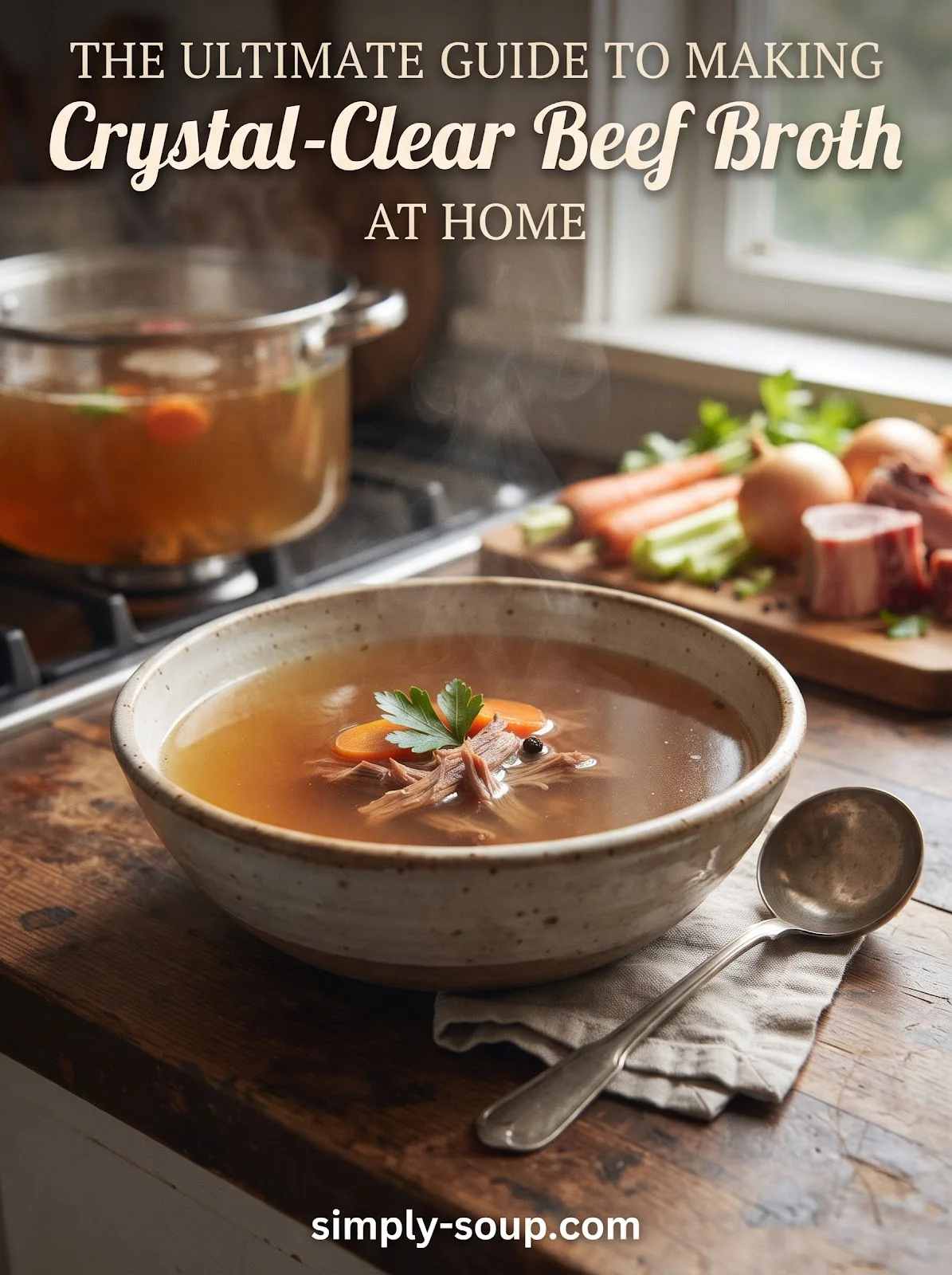
A good beef broth should taste rich and savoury. Clarity is a useful finishing touch, but a slightly cloudy broth can still be delicious. Gentle heat and careful straining matter more than chasing a perfectly transparent result.
What you will need
- 1.4–1.8kg beef bones, such as a mixture of knuckle and marrow bones
- 2 onions, halved; 2 carrots; 2 celery sticks
- 3 garlic cloves, 2 bay leaves and a sprig of thyme
- 1 teaspoon whole black peppercorns
- Cold water to cover the bones by about 5cm
- A large stockpot, roasting tray and fine sieve
1. Choose a roasted or lighter broth
For a darker, roasted flavour, heat the oven to 200°C conventional / 180°C fan. Roast the bones and onions for approximately 40–45 minutes, turning as needed, until well browned but not burnt. Transfer them to your stockpot.
For a lighter stock, you can blanch unroasted bones briefly in boiling water, drain and rinse them, then start again with fresh water. These are different approaches: you do not need to roast bones and then discard their flavour in a blanching stage.
2. Bring it up to heat slowly
Add the vegetables, garlic, herbs, peppercorns and water. Bring slowly towards a simmer. Skim off foam that collects on top, especially during the first half-hour. Avoid stirring the pot repeatedly.
3. Keep the simmer gentle
A rolling boil churns fat and particles into the liquid. Aim for a gentle simmer with occasional bubbles instead. Cook partially covered for around 6–8 hours, checking regularly and topping up with hot water if needed to keep the bones submerged. Never leave the hob unattended.
4. Strain without pressing
Lift out the largest solids with a slotted spoon. Carefully pour the broth through a fine sieve into a heatproof container; work in smaller batches rather than lifting a dangerously heavy pot. A sieve lined with clean, food-safe muslin can catch finer particles. Let the liquid drain without pressing the solids through.
5. Cool, then remove the fat
Divide the strained broth into smaller, shallow containers so it cools promptly. Follow our storage guide. Once chilled, the fat will usually form a layer on top that you can lift off. Season the broth when you use it: reducing it later will concentrate any salt.
Put your broth to work
Use it in beef and vegetable soup, or as the liquid in a stew. Add water if the flavour is too concentrated. Homemade broth varies with the bones, water and cooking time, so taste before you decide how much to use.